Everyday water.
Coffee your way.
Coffee water system co-development with a Korean home appliance company, spanning foundational device design, extraction, user experience and coffee products.
Adding coffee brewing
to an everyday appliance.
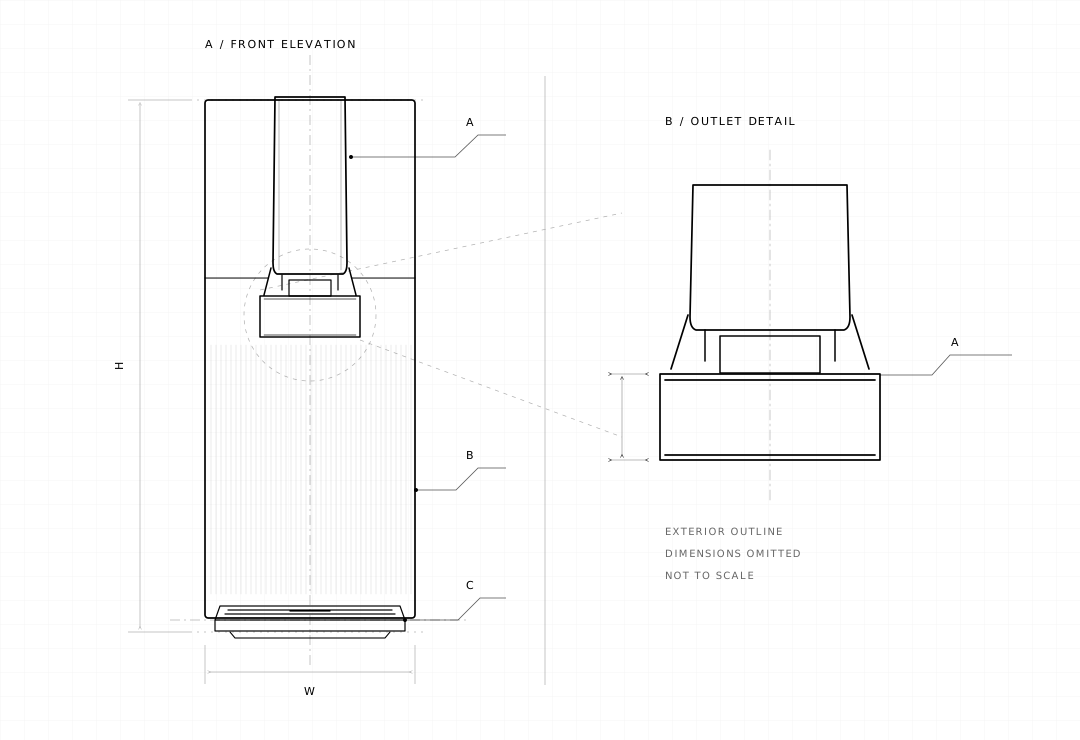
I co-developed a coffee water system with a Korean home appliance company. The product combines water purification with filter coffee brewing (also called drip coffee), bringing coffee to the same place where people get their everyday drinking water. It connects hot-water delivery and coffee brewing in one experience.
- PROJECT
- Coffee Water System Co-development
- PARTNER
- Korean home appliance company · undisclosed
- ROLE
- Device design, UX, extraction, prototype evaluation and coffee product development
- EXPERIENCE
- Drinking water · filter coffee brewing
The coffee experience
inside the product.
Features summarized from publicly available product information.
Water dispensing meets filter coffee
A drip module brews coffee from ground beans, extending the appliance beyond dispensing water.
Brewing settings for personal preferences
Users can select temperature, strength and brew volume. Brewing variables become settings they can choose.
Coffee in an everyday routine
Drinking water and preparing coffee share the same space. The brewing function takes over part of the work of heating and pouring water by hand.
COFFEE TERMSHere, filter coffee and drip coffee refer to coffee made by passing water through ground coffee in a filter. “Brewing” describes coffee preparation more broadly. A drip bag is a pre-filled, single-use paper filter; this page distinguishes it from preparing coffee with a dripper and separately added grounds.
The company and product names, along with internal development materials, are withheld under the agreement.
Flexible preparation.
Intuitive choices.
Reverse the detachable drip module for the preparation method, then select a recipe to suit your preference. The design connects the physical setup and recipe settings as one user experience.
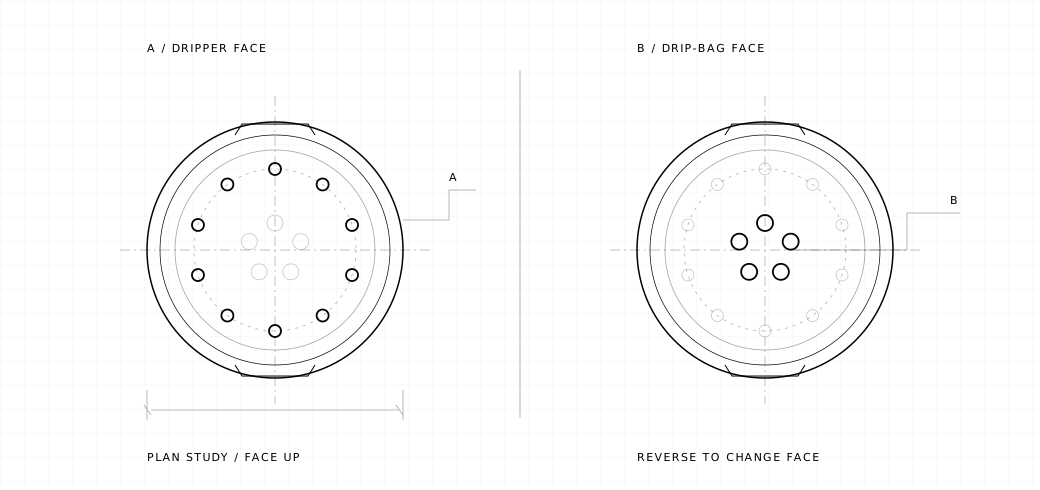
The outer outlet arrangement is highlighted for filter coffee prepared with a dripper and separately added ground coffee.
The central outlet arrangement is highlighted. Reverse the module for a drip bag: a single-use paper filter pre-filled with ground coffee, over which water is poured.
A reconstructed UI illustrating the settings structure, rather than a reproduction of the product’s screen, wording or behavior.
Turn brewing complexity
into approachable choices.
The design centers on making brewing conditions understandable and easy to choose. Three strength modes and three temperature options form nine recipe combinations, while coffee volume is selected separately.
Separating preference from quantity reduces what users must decide at once. The presentation follows the preparation sequence from fitting the module to choosing the settings.
Temperature is shown as choice levels without numerical values. The UI is an editorial reconstruction of the design intent.
From the device and brewing
to the coffee product.
My contribution spanned foundational device design, user experience, coffee extraction, prototype evaluation and coffee product development.
Foundational device design
I contributed to the foundational design of the coffee water system.
User workflow and experience
I designed user workflows and the experience of using the device.
Coffee extraction engineering and mechanics
I contributed to product development through coffee extraction engineering and mechanics.
Prototype evaluation and feedback
I evaluated prototypes and provided feedback for development.
Coffee product planning, development and production
I participated in planning, developing and producing coffee products for use with the appliance.
A starting point for
your own product.
Tell me about your product and the question you want to solve. These are examples of topics we can discuss.
Adding a coffee feature
“We want to add coffee brewing to an existing appliance. Where should we start?”
Start a discussion about users, coffee preparation and use scenarios, then identify brewing variables and questions to explore.
Reviewing a prototype’s coffee
“Our prototype works. How should we compare the coffee it makes?”
Discuss a collaboration to define coffees, recipes, evaluation criteria and records, including how to review measurements alongside tasting observations.
Making settings easier to understand
“We want customers to understand and choose temperature or strength settings.”
Discuss a review of feature names, choices, starting recipes and instructions in the order people prepare coffee.
Developing coffee for your appliance
“We also want to develop a coffee product for use with our appliance.”
Discuss planning, development and production of a coffee product for use with the appliance.
These are examples of collaborations informed by this co-development experience. Scope and deliverables for a new project are agreed after an initial discussion.
Start with a question,
even before a full brief.
- The product and its intended users
- Current stage: idea, prototype or launch preparation
- The question: features, brewing, taste or instructions
- Your timeline and materials available for review
After reviewing your product and question, we can identify what to explore and which materials are needed. At the idea stage, a conversation about how people would use the product is enough to begin.
Building a product with coffee?
Let’s talk.
Send a short introduction to your product and the question you want to solve.